Bird protection vs. stickers – why silhouettes aren’t enough

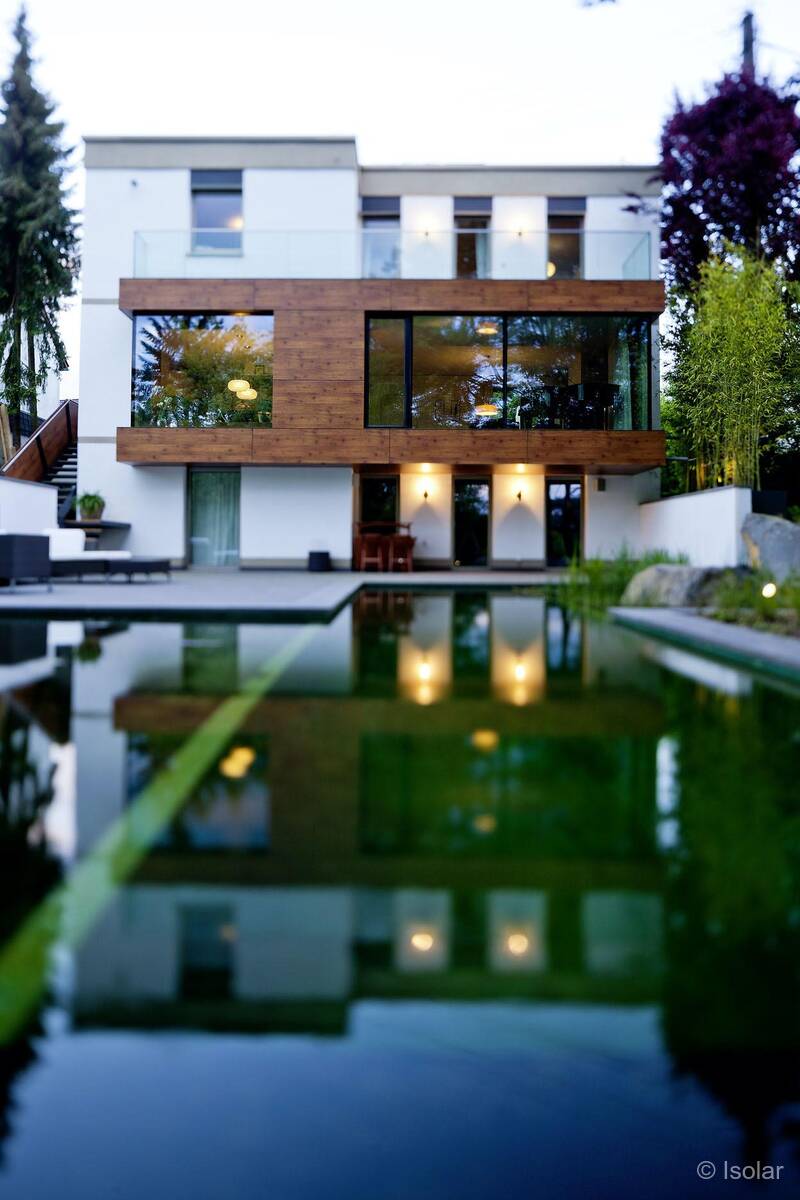
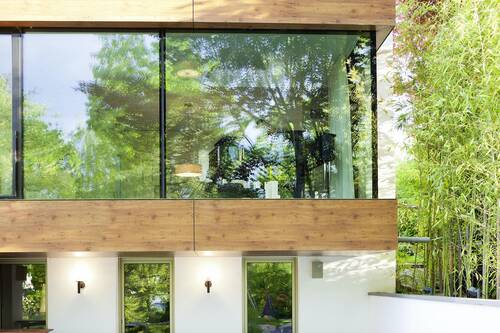
The residential house in Waldesch, Germany features ORNILUX® bird protection glass by Arnold Glas, using UV-reflective patterns to prevent bird collisions while maintaining clear architectural transparency.

Large glass surfaces shape modern architecture – transparent, open, filled with light. For birds, however, they represent an almost invisible obstacle. Every year, countless animals collide with windows or façades because they cannot perceive the reflective or transparent surface. Many property owners and planners therefore resort to stickers or bird-of-prey silhouettes. Well-intentioned as they are, they offer little real protection in practice.

Request expert consultation

Why birds can’t perceive glass

Birds perceive glass surfaces differently than humans. Transparent panes provide an unobstructed view of vegetation or sky; reflective surfaces mirror the surroundings so realistically that they are mistaken for a continuation of the flight path. Particularly dangerous are opposite windows, conservatories, and glass façades with high reflectivity. Birds fly at full speed – often with fatal consequences.
The risk of a collision caused by transparency increases with corner glazing or when an additional window at the back suggests a possible passage. It also rises when lights are switched on behind glass in the evening. Moreover, nighttime illumination of large buildings can itself become a hazard for birds.
The risk of a collision caused by reflection generally increases with higher external reflectance and when reflections show attractive targets for birds.
Why stickers and silhouettes don’t work

The familiar bird-of-prey silhouettes were originally intended to scare birds away. Today we know: this method falls short. Individual stickers create only small dark spots that birds simply fly around. Even several silhouettes placed next to each other do not form a continuous visual barrier. For markings to be truly effective, the gaps between elements would need to be less than ten centimetres – the “palm-of-the-hand rule” – resulting in a dense pattern that cannot be achieved with isolated stickers.

What really helps: patterns that remain visible

Effective bird protection is achieved when glass surfaces are clearly recognizable to a bird’s eye. This works with high-contrast patterns applied to the exterior surface. The specific type of marking is less important – what matters is density: lines, dots, or fine ornaments must cover the pane in a way that structures the surface so birds perceive it as a barrier.

Comparison of common measures

Many approaches promise bird protection, but their effectiveness varies greatly. The following overview compares the most important systems – from simple stickers to professional solutions using certified bird-protection glass:

SystemApplication AreaEffectiveness (per tests)AdvantagesDisadvantages
Bird-of-prey silhouettes (single)Private, temporaryProven ineffectiveLow-cost, quick to applyBirds do not perceive a coherent pattern; open areas remain dangerous
Films with line or dot patternsRetrofit for existing glazingEffective above 90% with dense markingsCost-effective, flexible, many designsOnly durable when applied outside; weathering may reduce longevity
Fritted glass / screen printingNew buildings, high-quality renovationsVery high, as patterns are permanently integrated into the glassDurable, weather-resistant, can be combined with solar controlHigher planning effort, additional investment
Etched / patterned glassNew buildings, entrance areasVery high – no clear view, minimal reflectionHigh safety, added privacyReduced transparency; less suitable for large façades or required sightlines
String curtains, fly screens, roller blindsExisting buildings, short-term solutionMedium – physical barrier reduces collisionsInexpensive, easy to installRestricted view, limited aesthetic effect
ORNILUX® mikadoNew buildings / renovation / public buildingsScientifically tested, high effectiveness (UV-reflective, “Effective” category)Permanent, invisible solution without films; clean aesthetic; compatible with thermal insulation glassHigher investment, but long-term effective and maintenance-free
ORNILUX® design (dots / lines)New buildings / renovation / public buildingsProven effective, tested in flight tunnel trialsDurable solution without films; subtle visible design; scratch- and UV-resistant; compatible with thermal insulation glassVisible markings require architectural integration; higher cost than film solutions

ORNILUX® – tested bird-protection integrated in glass

ORNILUX® is a bird-protection glass specifically developed to significantly reduce bird collisions. The technology is based on many years of research and real flight-tunnel experiments, in which birds’ reactions to different glass configurations are tested and objectively assessed.

ORNILUX® is available in several variants:

  • ORNILUX® mikado – an almost invisible, UV-active coating that is clearly perceived by birds but barely noticeable to humans.

  • ORNILUX® design dots and design lines – visible markings in the form of fine dots or lines, offering a calm visual appearance while providing a high level of protection.

Both systems combine function and design: maximum transparency for architecture, paired with proven protection for wildlife. ORNILUX® can be processed like conventional insulating glass and can be combined with all functional glass types, such as solar control, thermal insulation, sound insulation, or safety glass.

Bird-of-prey silhouettes or simple stickers do not provide effective bird protection. Only tested, permanently integrated structures within the glass offer a true solution. With ORNILUX®, architects, planners, and building owners have access to a system that unites functionality, design, and ecological responsibility – enabling transparent architecture with a significantly reduced risk for birds.

Further information on tested bird-protection solutions can be found at:

More about ORNILUX® bird-protection glass

FAQ – Frequently Asked Questions About Bird-Protection Glass

1. Why don’t birds recognize glass as an obstacle?

Because glass is transparent or reflective. Birds see the sky or surrounding habitat in it – and fly toward it.

2. Do bird-of-prey silhouettes help prevent bird strikes?

No. Single silhouettes are visually too small to effectively mark glass surfaces. Birds simply fly through the gaps.

3. What is the difference between films and real bird-protection glass?

Films are a temporary solution. Bird-protection glass such as ORNILUX® integrates the pattern permanently into the glass – maintenance-free and weather-resistant.

4. Which ORNILUX® variant is suitable for my project?

ORNILUX® mikado is ideal for highly transparent applications, while ORNILUX® design dots and design lines provide visible, design-oriented accents.

5. Can bird-protection glass be combined with other functions?

Yes. ORNILUX® can be combined with all functional glass types such as solar control, thermal insulation, sound insulation, and safety features without reducing its protective effect.

6. Where can bird-protection glass be used?

In façades, windows, conservatories, roof glazing, or glass canopies – everywhere transparency meets natural surroundings.