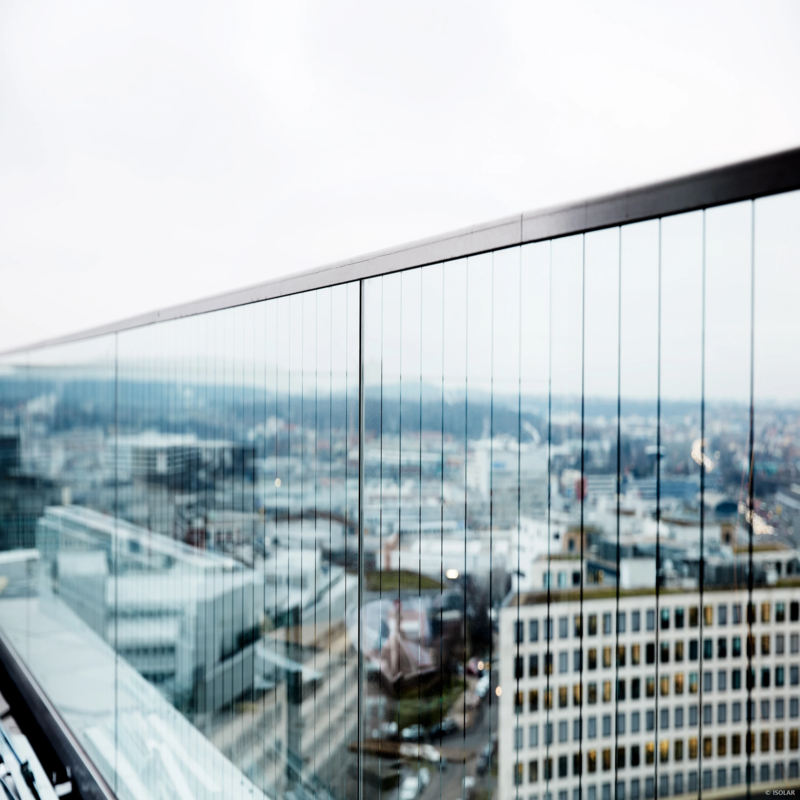
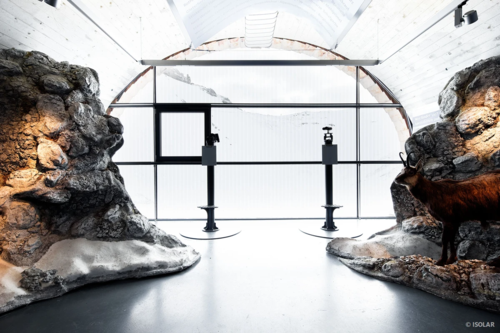
The Bird House in Berlin features ORNILUX® bird protection glass by Arnold Glas, using UV-reflective patterns to prevent bird strikes while maintaining bright and transparent architectural design.

Für den Vogelschutz

Bird Protection Glass

ORNILUX® Vogelschutzglas

More transparency and bird protection.

Glass is a central design element of contemporary architecture. The reflective and transparent properties of glass offer many advantages, however, for birds, windows and glass facades pose a danger. For example, the reflection of trees and shrubs are seen by birds as supposed “natural landing pads”. Or glass is not recognised as an obstacle, as birds see a natural “way through”. Bird impact is therefore a major factor in the decline in the global bird population.

Bird protection vs. stickers

With ISOLAR ORNILUX® we have developed a product family that resolves the problem of bird impact with scientific solutions. Functionality, efficiency and aesthetics need not be in contradiction to life-friendly architecture. That is why ISOLAR ORNILUX® is provided with a UV-reflecting coating. Birds can recognise this coating because they can see parts of the UV area. On the other hand, the coating is almost invisible to the human eye, which no longer results in the contradiction of transparency in architecture and bird protection.
Arcon slider

Our ORNILUX® variants:

Experts estimate that around 115 million birds die each year in Germany because they are unable to recognize glass panes and fly into the façades of buildings. Therefore, since 2017, there are legal requirements for urban land-use planning of cities and municipalities. These requirements impose an obligation to check for bird strikes on buildings as well as reduce the risk of bird strikes.

With the ORNILUX® product family, we offer a variety of certified solutions that enable both transparent and clearly visible architectural space and façade concepts and have been proven to reduce bird strikes.

We’ll be happy to advise you on the design of your optimal façade solution.

Get advice now

  l 0670 3 ansicht

ORNILUX® mikado

ORNILUX® design lines features a subtle linear pattern that provides effective bird protection while maintaining transparency and a clean, modern architectural appearance.

ORNILUX® design

ORNILUX® design

lines and dots

Function

ORNILUX® mikado coatings have been developed to ensure bird-friendly glass façades, while keeping the protective coating practically invisible to the human eye. The inspiration for this textured coating came from nature – the delicate, spider-web-like appearance is barely noticeable, yet very effective.

ORNILUX® mikado glass can be used in all windows and façades, like any conventional insulating or laminated safety glass. A combination with other functions such as solar control or thermal insulation in the insulating glass is possible without any problems. Especially in the USA, where bird-friendly façade design has been codified by law in a growing number of states for quite some time now, ORNILUX® mikado has proven its high protective effect many times over.

Applications

Façades, windows, roof glazing, spandrel glass, windbreak, partition wall, balcony glazing, winter garden glazing, noise barrier wall, noise reduction glazing, animal enclosure glazing and glass flood walls.

Glass Types

Multi-pane insulating glass (double glazing, triple glazing), laminated safety glass, tempered safety glass, heat strengthened glass and float glass.

Properties

The ORNILUX® mikado coating is barely visible to the human eye. For birds, however, it is visible. Since birds have four types of photoreceptive cones in their eye’s retina, they can perceive UV radiation, besides numerous other colours – and hence even the ORNILUX® coating. Inspired by nature, a net-type structure is applied to the glass using bionic technology. This structure resembles a spider web and reflects the light.

ORNILUX® mikado

invisible bird protection in the insulating glass unit

Function

ORNILUX® mikado coatings have been developed to ensure bird-friendly glass façades, while keeping the protective coating practically invisible to the human eye. The inspiration for this textured coating came from nature – the delicate, spider-web-like appearance is barely noticeable, yet very effective.

ORNILUX® mikado glass can be used in all windows and façades, like any conventional insulating or laminated safety glass. A combination with other functions such as solar control or thermal insulation in the insulating glass is possible without any problems. Especially in the USA, where bird-friendly façade design has been codified by law in a growing number of states for quite some time now, ORNILUX® mikado has proven its high protective effect many times over.

Applications

Façades, windows, roof glazing, spandrel glass, windbreak, partition wall, balcony glazing, winter garden glazing, noise barrier wall, noise reduction glazing, animal enclosure glazing and glass flood walls.

Glass Types

Multi-pane insulating glass (double glazing, triple glazing), laminated safety glass, tempered safety glass, heat strengthened glass and float glass.

Properties

The ORNILUX® mikado coating is barely visible to the human eye. For birds, however, it is visible. Since birds have four types of photoreceptive cones in their eye’s retina, they can perceive UV radiation, besides numerous other colours – and hence even the ORNILUX® coating. Inspired by nature, a net-type structure is applied to the glass using bionic technology. This structure resembles a spider web and reflects the light.

Certifications/Certification Mark

ORNILUX® mikado glass has been tested as a laminated safety glass and insulating glass in combination with different thermal insulation and solar control layers in various flight tunnel testing systems. All of the above glass types were avoided by a significant proportion of the birds in the tests. Apart from this, most ORNILUX® mikado glass types also meet the criteria for bird-friendly glazing of the American Bird Conservancy (assigned to the “Effective” category).

References