Bird-Friendly Glass: A Comprehensive Analysis of European and International Standards Considering Architecture, Technology, and Biodiversity

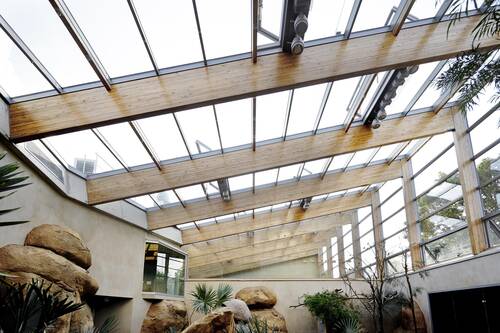
Vogelschutzglas mit ORNILUX® Technologie von ISOLAR an einer Vogelhaus-Installation in Berlin, Deutschland

The modern architecture of the 21st century is inextricably linked with glass as a building material. As a symbol of transparency, openness, and technological progress, glass has revolutionized the design of our urban living spaces. However, this aesthetic and functional achievement harbors a severe ecological downside: massive bird collisions with glass surfaces. Scientific projections by the German Working Group of State Bird Conservancies (LAG VSW) estimate the number of collision victims in Germany alone at 100 to 115 million individuals annually. Worldwide, it is estimated that glass surfaces represent the second most common anthropogenic cause of death for birds, following habitat destruction. Against this backdrop, the topic of bird-friendly glass has evolved from an ecological niche into a central component of building planning relevant to permits and international standardization.

Learn more: Bird protection glass – Why it is becoming increasingly important for nature conservation, sustainability, and modern architecture

The Biological Dimension: Why Glass is Invisible to Birds

To understand the technological requirements for bird-friendly glass, avian perception must first be de- or reconstructed. Over the course of evolution, birds have not developed cognitive mechanisms to interpret transparent or highly reflective surfaces as physical obstacles. Their eyes, which are mostly positioned laterally on the head, offer an almost seamless panoramic view—essential for the early detection of predators—but this limits their spatial vision at close range.

Mechanisms of Collision: Transparency and Reflection

The physical properties of glass lead to accidents in two main scenarios. First, transparency creates the illusion of a clear flight path. This occurs particularly often with corner glazing, glass noise barriers, or transparent connecting corridors, when birds perceive vegetation or the open sky behind them. Second, under certain lighting conditions, glass acts as a perfect mirror. When the exterior reflectance is high and the interior illuminance is lower than outdoors, the glass surface reflects the natural habitat. Birds fly towards these reflected trees, shrubs, or clouds, mistaking them for real habitat.


Parameter of Perception

Human

Bird

Implication for Bird Protection

Frame Rate

approx. 20 frames/second

up to 180 frames/second

Birds perceive movements and details much faster.

Visible Spectrum

400 nm - 700 nm

300 nm - 700 nm (incl. UV-A)

Birds can perceive UV reflections that are invisible to humans.

Spatial Vision

Pronounced (frontal)

Limited (due to lateral eyes)

Obstacles are often recognized too late during fast flight.

Obstacle Recognition

Cognitively learned

Evolutionarily dependent on contours

Glass without texture is interpreted as air or reflection.

The Role of UV Vision

A significant technological approach in recent decades was based on the ability of many birds to perceive light in the UV-A spectrum. Since humans cannot see this range, the integration of UV-reflecting patterns into glass surfaces promised effective bird protection while maintaining unrestricted human visibility. Products like the ORNILUX® mikado series from Arnold Glas utilize this effect by integrating structures reminiscent of spider webs. However, in scientific flight tunnel tests, many of these UV solutions showed inconsistent performance. Their effectiveness is highly dependent on specific lighting conditions and the contrast with the background, which is why purely visual markings are often considered more reliable today.

Bird protection vs. stickers – why silhouettes aren’t enough
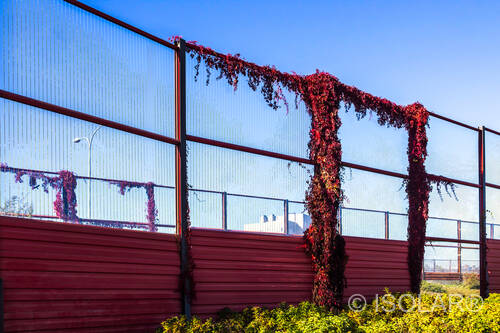
Szene laermschutz

Legal Framework in Europe

Protecting birds from glass collisions is no longer a purely voluntary measure but is increasingly anchored in a complex web of European and national law. The foundation is the EU Birds Directive (Directive 2009/147/EC), which obliges all member states to permanently maintain the populations of naturally occurring wild birds.

Germany: Federal Nature Conservation Act and Regional Building Codes

In Germany, bird protection is primarily regulated by the Federal Nature Conservation Act (BNatSchG). According to § 44 BNatSchG, it is prohibited to kill or injure wild animals of specially protected species. A violation of this prohibition on killing occurs if the risk is significantly increased by a construction project and no recognized protective measures are taken. 

At the state level, there are specific concretizations. Hesse takes a pioneering role here with § 37 of the Hessian Nature Conservation Act (HeNatG). According to this, glass facades with a continuous area of more than 20m² are only permissible if they are designed to be bird-safe through effective measures. Cities like Berlin have also developed guidelines that include bird protection as a fixed component of the building law review, especially for exposed buildings or near ecologically valuable areas.

Austria: The Power of ONR 191040

With the introduction of ONR 191040 in 2010, Austria set a globally recognized standard for testing bird-friendly glass. The rule defines detailed test protocols for flight tunnel experiments in which birds can choose between a marked and an unmarked pane. A glass is only considered “tested bird-friendly glass according to ONR 191040” if it has been examined in the flight tunnel described above. A distinction is made between “Category A - highly effective” with an approach rate of maximum 10% and “Category B - conditionally effective” with approach rates between 10 and 20%. This scheme serves today in large parts of Europe as a reference for evaluating the effectiveness of products.

Switzerland: Planning Duty of Care

In Switzerland, bird protection is based on the Federal Act on the Protection of Nature and Cultural Heritage (NHG) and the Hunting Act (JSG). The Swiss Ornithological Institute Sempach acts as the central competence center here and has established comprehensive standards for “Bird-Friendly Building with Glass and Light”. These standards are increasingly demanded as state-of-the-art in building permit procedures, with the focus not only on the glass itself but also on reducing light pollution, which particularly endangers nocturnal migratory birds.

The Evaluation System of the Working Group of State Bird Conservancies (LAG VSW)

For the practical assessment of the collision risk at buildings, the LAG VSW has developed a detailed point system that serves as a guide for architects and authorities. This system evaluates both building-related and environment-related factors.

Evaluation Factor

Criteria for High Score (Risk)

Criteria for Low Score (Low Risk)

Glass Proportion of Facade

> 75% (4 points)

< 25% (1 point)

Size of Individual Elements

> 6 m² (4 points)

< 1.5 m² (1 point)

Transparent Areas

Corner glazing, see-throughs present (high)

No see-throughs (low)

Surrounding Vegetation

Trees/shrubs directly in front of the pane (high)

Highly mirrored surroundings (low)

Degree of Sealing in Surroundings

< 25% sealing (4 points)

> 75% sealing (1 point)

A total score of 11 to 16 points indicates a high risk, where avoidance measures are absolutely necessary. For values between 7 and 10 points, an individual case review by experts is advisable. This system allows for a differentiated view: While a fully glazed villa in the forest represents an extreme risk, a glazed office building in a densely builtup inner city without vegetation can have a significantly lower risk, provided there are no see-throughs.

International Comparison: Standards in North America

North America, particularly Canada and the USA, has experienced dynamic development in bird protection legislation in recent years. The focus here is not only on the effectiveness of individual glasses but on the entire building design.

Canada: The National Standard CSA A460

With the A460:19 standard, the Canadian Standards Association (CSA) has created a comprehensive set of rules that serves as a global benchmark. The standard addresses four core areas:

  • Glass Handling: At least 90% of glass surfaces in critical zones (up to 16 m height) must be treated. 
  • Integrated Structures: Use of louvers, grilles, and sun protection systems. 
  • Site Planning: Reduction of the glass proportion near habitats to 25-40%. 
  • Light Management: Avoidance of upward light emission and controlled interior lighting at night.

USA: Regional Pioneers and LEED Certification

In the USA, bird protection is primarily regulated at the municipal level. New York City introduced one of the strictest obligations worldwide with Local Law 15: Almost all new buildings must use bird-friendly glass up to a height of 75 feet (approx. 23 m). San Francisco also established standards for “Bird-Safe Buildings” with Planning Code Section 139 as early as 2011, which specifically address buildings near green spaces and bodies of water. 

An important industrial driver is the LEED certificate of the U.S. Green Building Council. Pilot Credit 55 “Bird Collision Deterrence” allows builders to collect points for using materials with a low “Threat Factor” (TF). The TF is determined through tunnel tests and indicates how many birds fly towards the test pane compared to the control pane. A TF of under 30 is considered acceptable for certification.

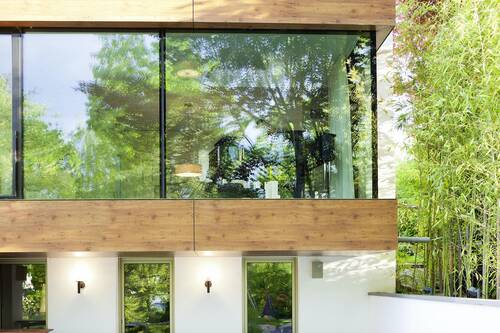
The residential house in Waldesch, Germany features ORNILUX® bird protection glass by Arnold Glas, using UV-reflective patterns to prevent bird collisions while maintaining clear architectural transparency.

Technical Solutions and Marking Strategies

The effectiveness of bird-friendly glass is based on transforming an invisible barrier into an obstacle perceivable by birds. Various marking techniques have established themselves here, fulfilling different aesthetic and functional requirements.

The “Hand Palm Rule” and Grid Dimensions 

Scientific studies have shown that birds try to fly through gaps they consider passable. The rule of thumb is the palm of a human hand: Markings should be arranged so that no unmarked gaps larger than 10 cm (vertical) × 5 cm (horizontal) are created. Newer standards, especially in North America, tighten this to 5 cm × 5 cm (2 × 2 Inch Rule) to offer effective protection even for very small songbirds.

Positioning of the Marking: Surface 1 vs. Surface 2

A crucial technical aspect is the placement of the marking within the insulating glass. 

Surface 1 (Exterior): This is the most effective position. The marking breaks the reflection of the surroundings directly at the foremost boundary surface. Methods for this include ceramic screen printing, etching, or the application of films. 

Surface 2 (Inside of the Exterior Pane): Here, the marking lies protected in the cavity between the panes. This is often aesthetically desired but carries the risk that the marking is “outshone” by strong reflections on Surface 1 and remains invisible to the bird.

Marking Techniques at a Glance


Technique

Description

Durability

Special Features

Ceramic Screen Printing

Baking of enamel colors on Pos. 1.

Very high (lifelong)

Enables complex graphic patterns; degree of coverage controls light transmission.

Acid Etching

Chemical matting of the surface.

Very high

Subtle, translucent; ideal for modern solutions.

UV Coating

UV-reflecting/absorbing layers.

High

Almost invisible to humans; effectiveness depends on light.

Laser Engraving

Microstructuring of the glass surface.

Very high

No colors needed; very precise patterns possible.

Metallic Sequins

Integrated highly reflective elements.

Very high

Extremely low degree of coverage (< 1%); highly effective in direct sun.

Product Analysis: The ORNILUX® Series

Arnold Glas is considered a pioneer in UV-based bird protection solutions. The ORNILUX® products use biomimetic research, inspired by UV-reflecting spider webs. While ORNILUX® mikado is almost invisible, variants like ORNILUX® design offer visible lines or dots, and are thus able to provide higher effectiveness in critical areas. The ORNILUX® series remains the market leader for aesthetically demanding solutions in private construction and prestigious projects.

Explore the products: Discover the ORNILUX® series

Integration into the Planning Process and Economic Efficiency

A common prejudice against bird-friendly glass is its supposedly high cost burden. However, experts point out that with early integration into the design phase, the additional costs are marginal.

Cost-Benefit Analysis

Studies on large projects show that renovation with bird-friendly glass can reduce collisions by over 90%. The costs for bird-friendly glazing in projects like the Kendeda Building in Atlanta amounted to only 32,000 USD, which corresponded to less than 0.2% of the total construction costs. In contrast, the subsequent retrofitting of “death traps” is often extremely expensive and visually unsatisfactory.

Thermal Load and Statics

When selecting bird-friendly glass, physical interactions must be considered. Dark markings on Surface 1 increase the absorption of solar radiation, leading to stronger heating of the pane. This can induce thermal stresses, which in the worst case lead to glass breakage. Professional advice from project consultants is therefore essential to coordinate the structural dimensioning and the choice of glass type (e.g., tempered or heat-strengthened glass) with the additional thermal load.

Sustainability Certificates and E-E-A-T Relevance

Bird protection is an integral part of the biodiversity strategies of modern building certifications. The importance of Expertise, Authoritativeness, and Trustworthiness in the context of modern information standards requires a solid data basis and reference to recognized testing institutes.

Certification Systems in Detail

DGNB (Germany): The system evaluates “Ecological Quality”. Bird protection measures contribute to the score in the biodiversity area. Orientation towards the evaluation scheme of ONR 191040 serves here as confirmation of technical effectiveness. 

LEED (International/USA): With Pilot Credit 55, projects are rewarded that present a comprehensive strategy package for collision avoidance. The use of materials with a low Threat Factor is explicitly required here. 

BREEAM (International/UK): BREEAM places great value on the “Land Use & Ecology” chapter. Measures to avoid animal collisions are evaluated as part of sustainable site management.

Expertise, Authoritativeness, and Trustworthiness

For planners and manufacturers, it is essential to provide information that reflects the current state of science:

  • Expertise: Reference to ornithological professional societies such as the Working Group of State Bird Conservancies (LAG VSW) or the Swiss Ornithological Institute. 
  • Authoritativeness: Use of products tested according to ONR 191040 or the WIN standard in Hohenau-Ringelsdorf. 
  • Trustworthiness: Transparent presentation of test reports and field studies on the effectiveness of the installed solutions.

In modern information environments, content that provides precise answers to user queries like “Which bird-friendly glass is most effective?” or “Legal requirements for bird protection NRW” is preferred. The use of structured data (tables) and clear hierarchies in reporting massively increases the visibility and relevance of these technical articles.

Future Trends: Digitalization and Adaptive Facades

The development of bird-friendly glass does not stand still. New technologies promise an even better balance between protective effect and aesthetics.

3D Printing and Digital Simulation

Industrial 3D printing makes it possible to apply individual patterns directly to the glass surface, offering architects maximum design freedom. In parallel, digital simulation tools enable the prediction of collision hotspots already in the computer model. By analyzing reflection patterns at different times of day and year, the marking can be specifically reinforced where the risk is highest, while other areas remain subtle.

Adaptive Systems and Smart Glass

The integration of bird protection functions into “Smart Glass” (electrochromic glass) is a future field of research. Here, markings could only become visible when sensors report increased bird activity or lighting conditions create a critical reflection. The combination with photovoltaic elements also offers synergy effects between renewable energy generation and species protection.

Frequently Asked Questions (FAQ)

When is bird-friendly glass legally required?

In Germany, it applies to glass facades > 20 m² (Hesse § 37 HeNatG) and with a high collision risk according to LAG VSW (11-16 points). The EU Birds Directive (2009/147/EC) obliges all member states to protect wild birds.

How effective are the glasses of the ORNILUX design series?

The ORNILUX® products achieve Category A or B in flight tunnel tests according to ONR 191040. ORNILUX® mikado is almost invisible, ORNILUX® design offers visible markings for critical areas.

What are the additional costs for bird-friendly glass?

With early planning, only 0.2% of construction costs (e.g., Kendeda Building Atlanta: 32,000 USD). Subsequent retrofits are significantly more expensive.

Which position is best for markings?

Surface 1 (Exterior) is physically superior, as reflections are broken directly. ORNILUX® design solutions are optimized for this position and tested in the flight tunnel. ORNILUX® mikado is used on Surface 2 of a glazing.

What grid dimensions are required?

Hand palm rule: max. 10 cm (vertical) × 5 cm (horizontal). North America: 5 cm × 5 cm for small songbirds.

Do you get certification points through bird protection?

Yes! DGNB (Biodiversity), LEED Pilot Credit 55 (Threat Factor < 30), BREEAM (Land Use & Ecology).

Does bird-friendly glass impair visibility?

ORNILUX® mikado is almost invisible to humans. Design variants offer subtle but effective patterns.

Autor: Hannes Spiß

ISOLAR GLAS Beratung GmbH
Otto-Hahn-Straße 1
55481 Kirchberg
Routenplaner (www)